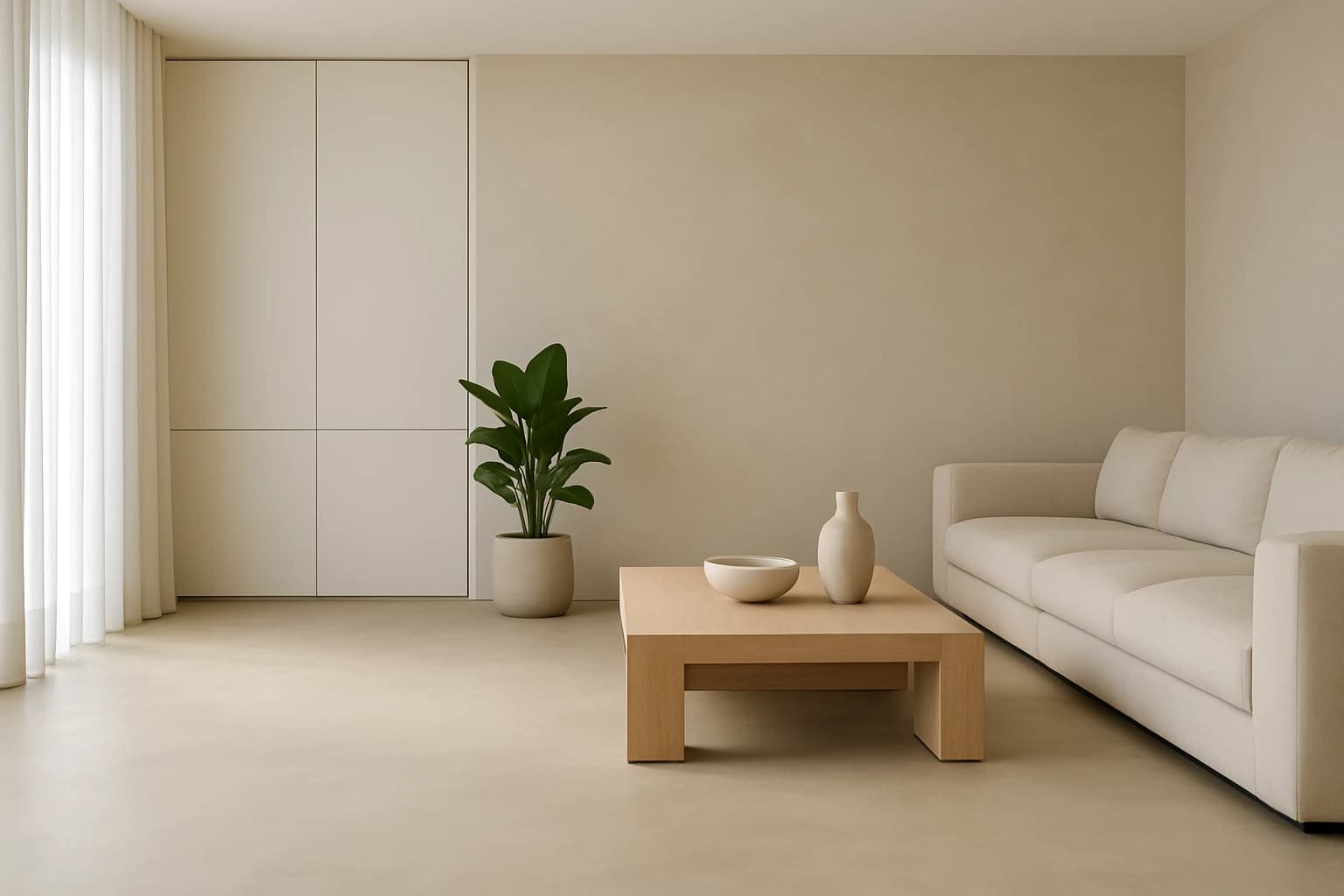
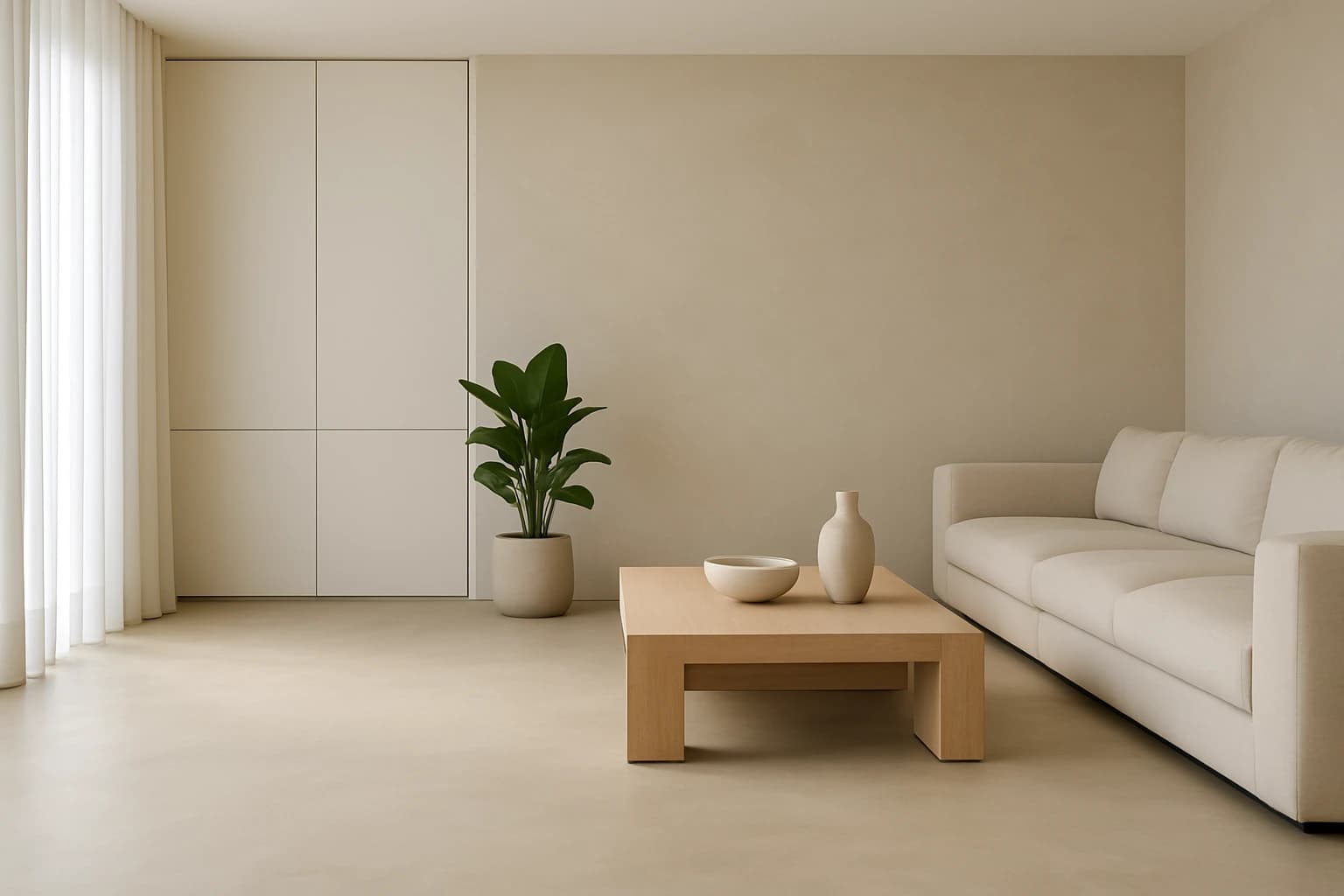
Microcement is available in more than 60 colours, grouped into four families: neutrals and whites, greys, earth and warm tones, and darks. On top of the standard chart, almost any tone can be mixed bespoke to match a reference, a paint code or a brand colour. Because the pigment is added to a handcrafted material, the same colour also reads slightly differently depending on the finish and the light.
Guides
Microcement Colours and Finishes: How to Choose Yours (and 2026 Trends)
From neutral greys to warm terracotta, and from smooth to mineral finishes, choosing microcement is really two decisions: texture and tone. Here is how a working applicator helps clients pick the right one, plus the colours trending in 2026.
- Esteban Godoy Méndez
- 10 min read
- Category
- Guides
- Reading
- 10 min
- Coverage
- Costa del Sol
Section 01
What microcement colours are available?
That breadth is one of the reasons microcement has become a go-to surface for interior design. You are not picking from a handful of factory tiles; you are choosing a tone and a texture that will run seamlessly across floor, wall and shower. Here is how the palette breaks down:
- Neutrals and whites — snow white, off-white, ivory, sand and beige. They bring light and a sense of space, and they are the safest starting point for most homes.
- Greys — pearl, light, mid, dark and graphite. The timeless choice for modern, minimalist interiors, though the very cool greys are softening in 2026 (more on that below).
- Earth and warm tones — earth, terracotta, ochre, coffee and caramel. Warm, natural and increasingly popular for cosy, Mediterranean interiors.
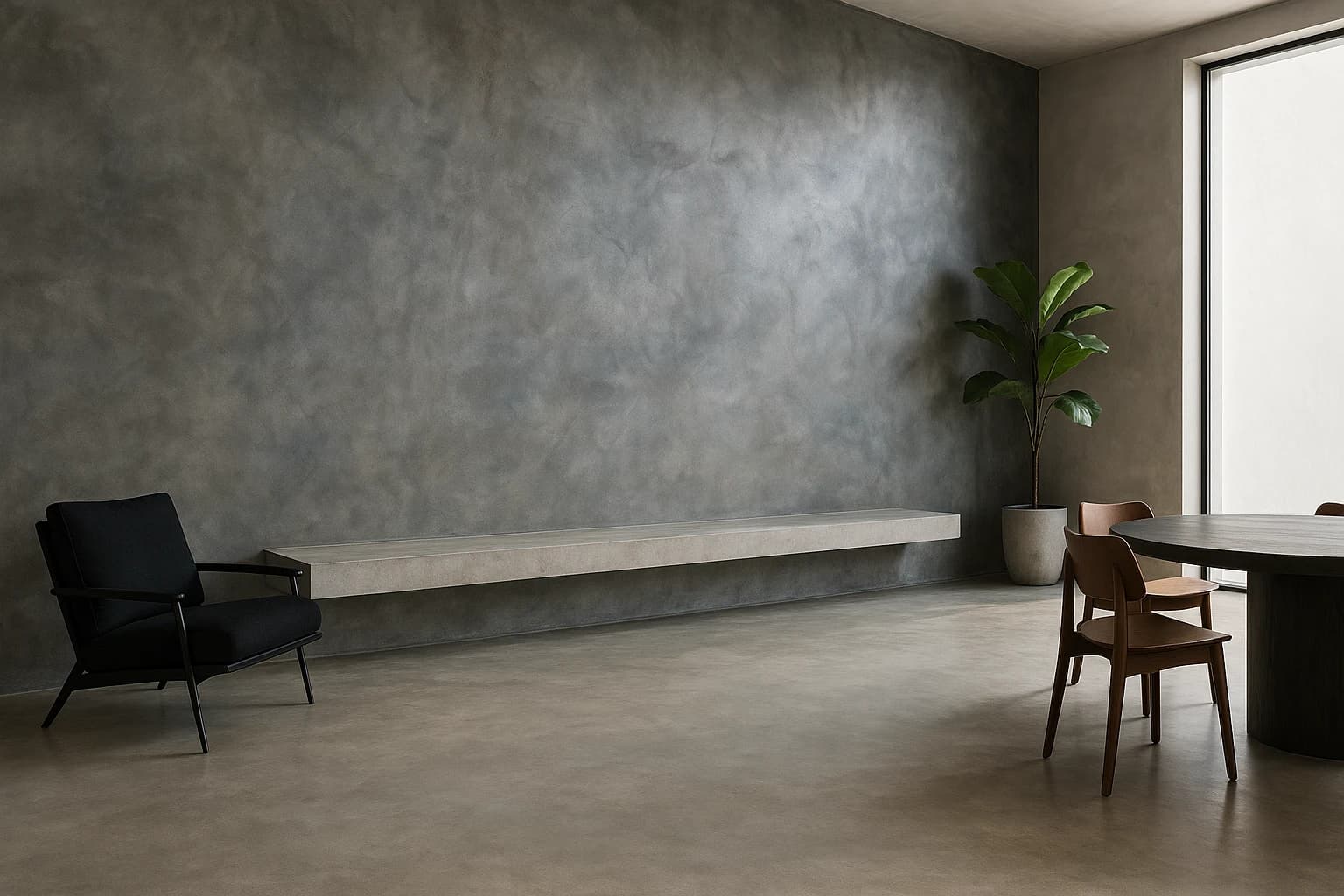
- Darks — anthracite, slate and black. Sophisticated and full of character, best used in larger, well-lit rooms or as a feature.
A quick word of honesty from the workshop: a colour chart is only a starting point. Microcement is applied by hand and sealed, so the final tone always has a little life of its own. That is a feature, not a fault, but it is the reason we never let a client commit from a screen.
Section 02
How do I choose the right microcement colour?
Choose your microcement colour by starting with the room's light, then matching the tone to the feeling you want and the size of the space. Pale neutrals open up small or north-facing rooms; warm earth tones add cosiness to living areas; dark tones look spectacular but need plenty of natural light to avoid feeling heavy. Once you have a shortlist, test a physical sample in the actual room, at different times of day, before you commit.
After years applying microcement across homes on the Costa del Sol, this is the order of questions I walk clients through:
- How much light does the room get? A bright, south-facing space can carry a deep graphite or clay tone with ease. A small, north-facing bathroom usually wants a pale, warm neutral to feel larger and brighter.
- What mood are you after? Calm and airy points to neutrals and soft greys. Warm and homely points to sand, taupe and terracotta. Bold and contemporary points to anthracite or a metallic detail.
- How big is the surface? A colour that looks perfect on a small sample can feel much darker spread across an open-plan floor. As a rule, go one shade lighter than you think for large areas.
- What is the room next to it? Because microcement runs seamlessly, the tone you pick for the hallway floor will flow into the living room. Think about the whole journey, not one room in isolation.
Why does microcement colour change with lighting?
Microcement colour changes with lighting because it is a matt, mineral surface that absorbs and scatters light rather than reflecting it flatly like a glossy tile. The same sand tone can look creamy under warm evening lamps and almost grey under cool midday daylight. North-facing rooms pull colours cooler; south-facing rooms warm them up.
This is exactly why a sample on a website or a printed chart can mislead you. We always bring physical samples to the home so you can lay them on the actual floor or hold them against the wall, in your own light, morning and night. It is the single best way to avoid the most common regret in any surface project: a colour that looked right on paper and wrong on the wall. If you are at this stage, you can ask for a colour sample and we will bring the relevant tones to you.
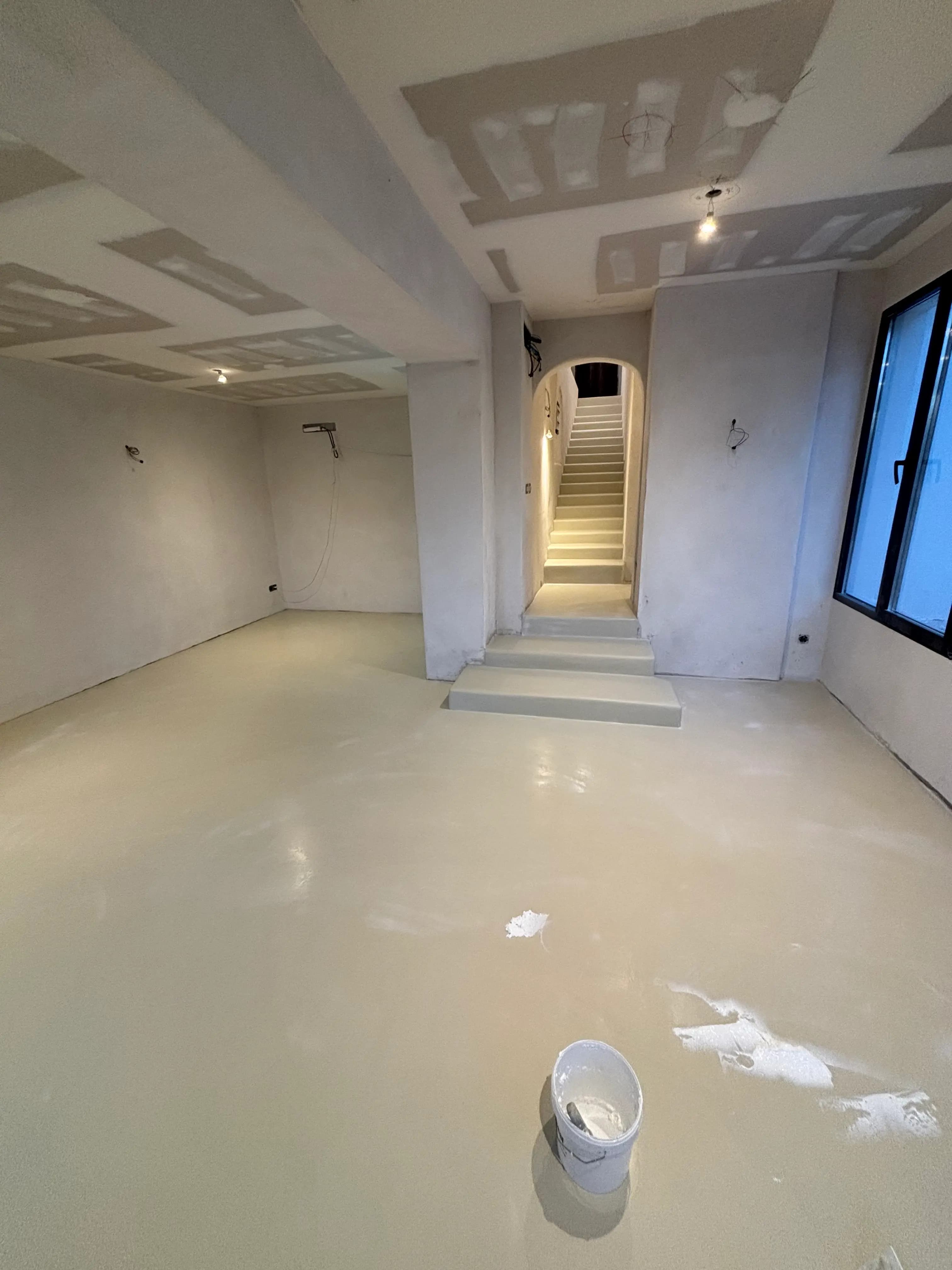
Microcement on site
Section 03
What microcement finishes are there — smooth, satin or mineral?
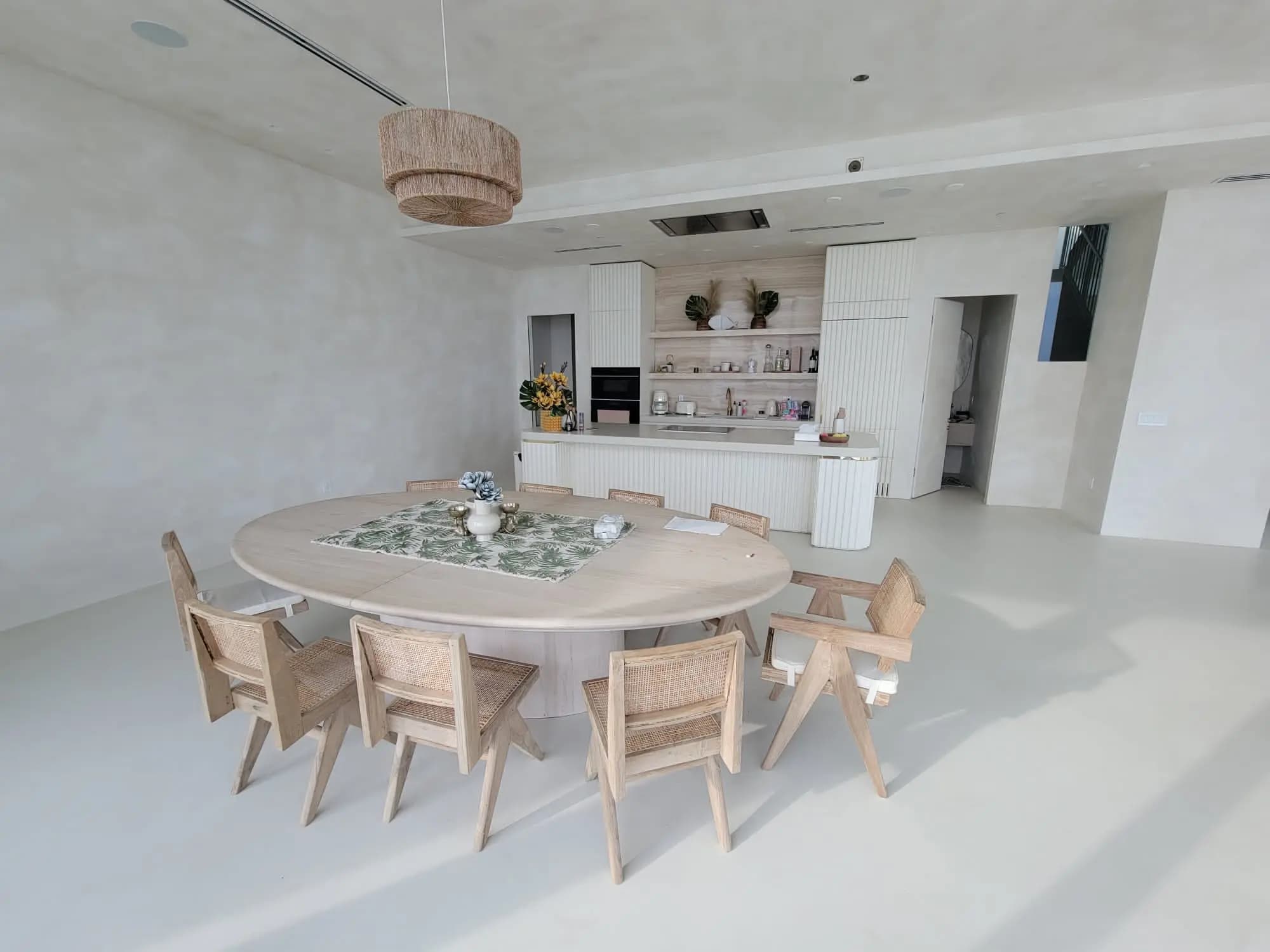
There are three core microcement finishes — rustic, smooth and metallic — and the smooth finish can then be sealed in matt, satin or gloss. The texture decides both the look and the practical behaviour of the surface, such as slip resistance and how easy it is to clean. The colour sets the mood; the finish sets the character.
Here is how the finishes compare and where each one belongs:
| Finish | Texture & look | Reflectivity | Best for |
|---|---|---|---|
| Rustic / mineral | Rough, tactile, natural movement | Low (matt) | Terraces, pools, outdoor stairs, wet rooms, rustic kitchens |
| Smooth | Even, contemporary, soft to the touch | Matt, satin or gloss (you choose) | Floors, walls, bathrooms, modern kitchens, living rooms |
| Metallic | Reflections and highlights, never identical twice | Higher, decorative sheen | Feature walls, furniture, statement details, premium spaces |
Rustic / mineral
- Texture & look
- Rough, tactile, natural movement
- Reflectivity
- Low (matt)
- Best for
- Terraces, pools, outdoor stairs, wet rooms, rustic kitchens
Smooth
- Texture & look
- Even, contemporary, soft to the touch
- Reflectivity
- Matt, satin or gloss (you choose)
- Best for
- Floors, walls, bathrooms, modern kitchens, living rooms
Metallic
- Texture & look
- Reflections and highlights, never identical twice
- Reflectivity
- Higher, decorative sheen
- Best for
- Feature walls, furniture, statement details, premium spaces
Rustic and mineral finishes
The rustic, or mineral, finish keeps the natural texture of the material. It has subtle movement and trowel character, which both looks handcrafted and adds grip underfoot. That makes it the right call for terraces, pool surrounds and outdoor stairs, where slip resistance matters, and for interiors that want an organic, Mediterranean feel rather than a flawless modern surface.
Smooth finishes (matt, satin or gloss)
The smooth finish is the everyday workhorse: even, easy to clean and contemporary. What many people do not realise is that "smooth" is then sealed in one of three sheens. Matt is the most popular today, soft and understated. Satin adds a gentle glow and a touch more wipe-clean resistance. Gloss reflects the most light and makes a colour pop, but it also shows more marks. For most homes, a matt or satin seal on a smooth finish is the sweet spot.
Metallic finishes
The metallic finish is the most decorative and the most exclusive. Pigments with a metallic effect create reflections and depth, so the surface shifts as you move around it and is never exactly the same twice. It is best reserved for feature walls, bespoke furniture and details where you want a surface to take centre stage, rather than for a whole floor.
Section 04
Which microcement colours are trending in 2026?
The biggest microcement trend in 2026 is the shift from cool, flat greys towards warm, tactile and natural tones. Terracotta, taupe, clay and soft olive are leading the way, alongside greige neutrals that bridge grey and beige. At the other end, deep moody darks such as anthracite are popular for single feature walls. The common thread is warmth, texture and a more organic, hand-finished look.
A few patterns I am seeing repeatedly in projects right now:
- Warm earth tones over cool grey. The flat, cool grey that defined the last decade is being replaced by terracotta, clay and caramel. They feel warmer and more inviting, and they suit the Mediterranean light beautifully.
- Greige as the new neutral. A soft blend of grey and beige, greige is the safest yet most current choice for open-plan floors. It flatters warm and cool décor alike.
- Moody darks as a feature. Rather than dark everything, clients are choosing one anthracite or graphite feature wall, often in a hallway, behind a bed or in a shower, for contrast and drama.
- Mineral texture over flat smooth. Even within smooth finishes, there is a clear pull towards visible trowel movement and a more natural, handcrafted surface, away from the perfectly uniform look.
Trends are useful, but they are not a brief. A colour you love and will still love in ten years beats a trend you chose because it was fashionable. Use these as inspiration, not instructions.
Microcement on site
Section 05
Which colour suits a small bathroom versus an open-plan floor?
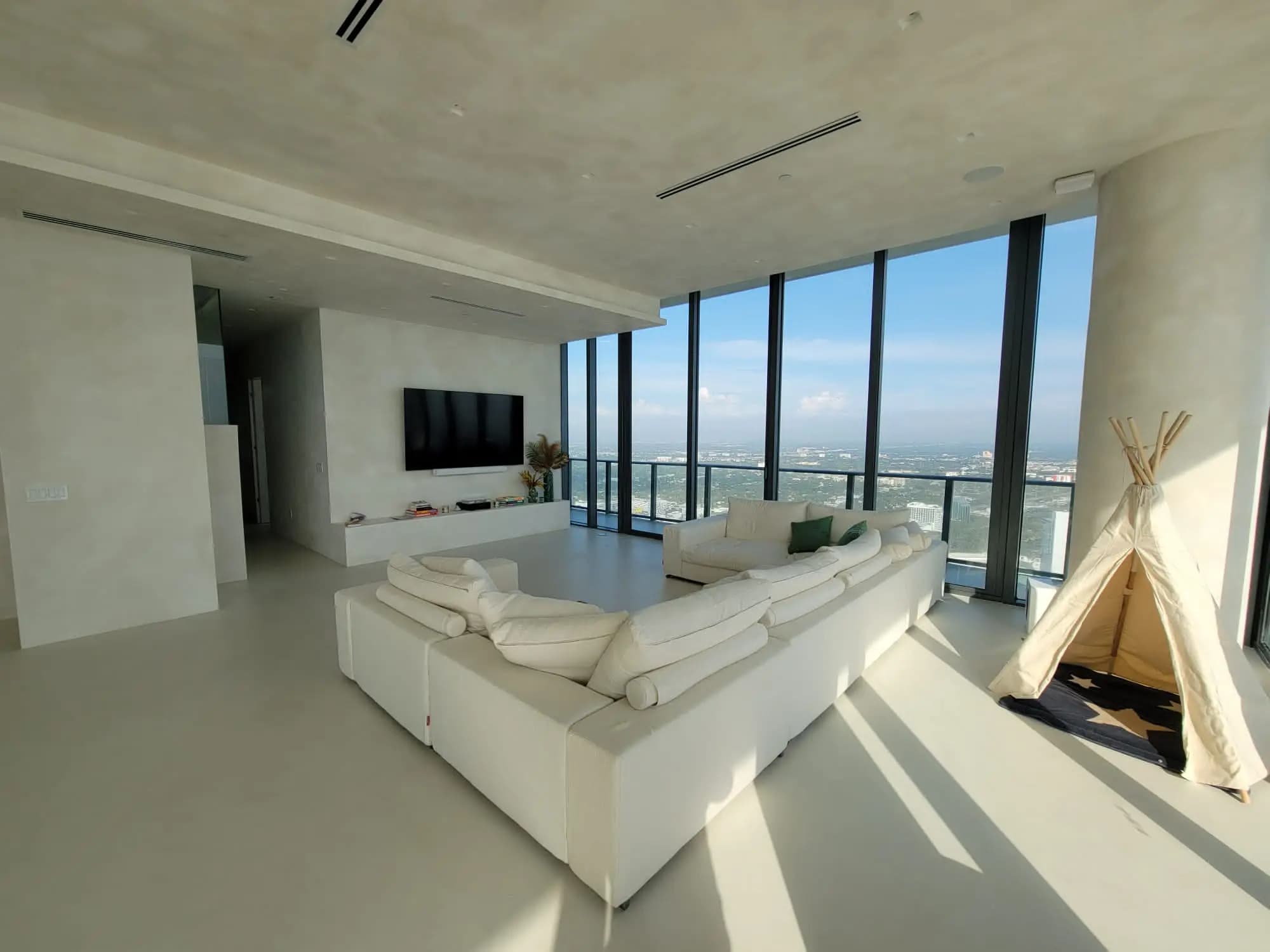
For a small bathroom, choose a pale, warm neutral such as sand, greige or off-white to make the room feel larger and calmer. For a large open-plan floor, you have far more freedom: mid greys, warm taupes and even darker tones all work, because the space and the light can carry them. The rule of thumb is that small or dim rooms want lighter, warmer tones, while large, bright rooms can take more depth and drama.
In bathrooms specifically, soft neutrals also have a practical advantage: they hide everyday water marks and limescale better than a very dark gloss or a stark white. If you are planning a wet room, the microcement bathrooms we deliver pair these calming tones with a matt or satin smooth finish, sealed for direct water.
On floors, remember that the tone will travel. Microcement runs seamlessly from room to room, so a microcement floor colour needs to work in the hallway, the living room and the kitchen at once. A versatile greige or warm grey is the most forgiving choice for a whole-home floor, while a feature room can take something bolder.
Microcement on site
Section 06
How GM Microcemento helps you choose
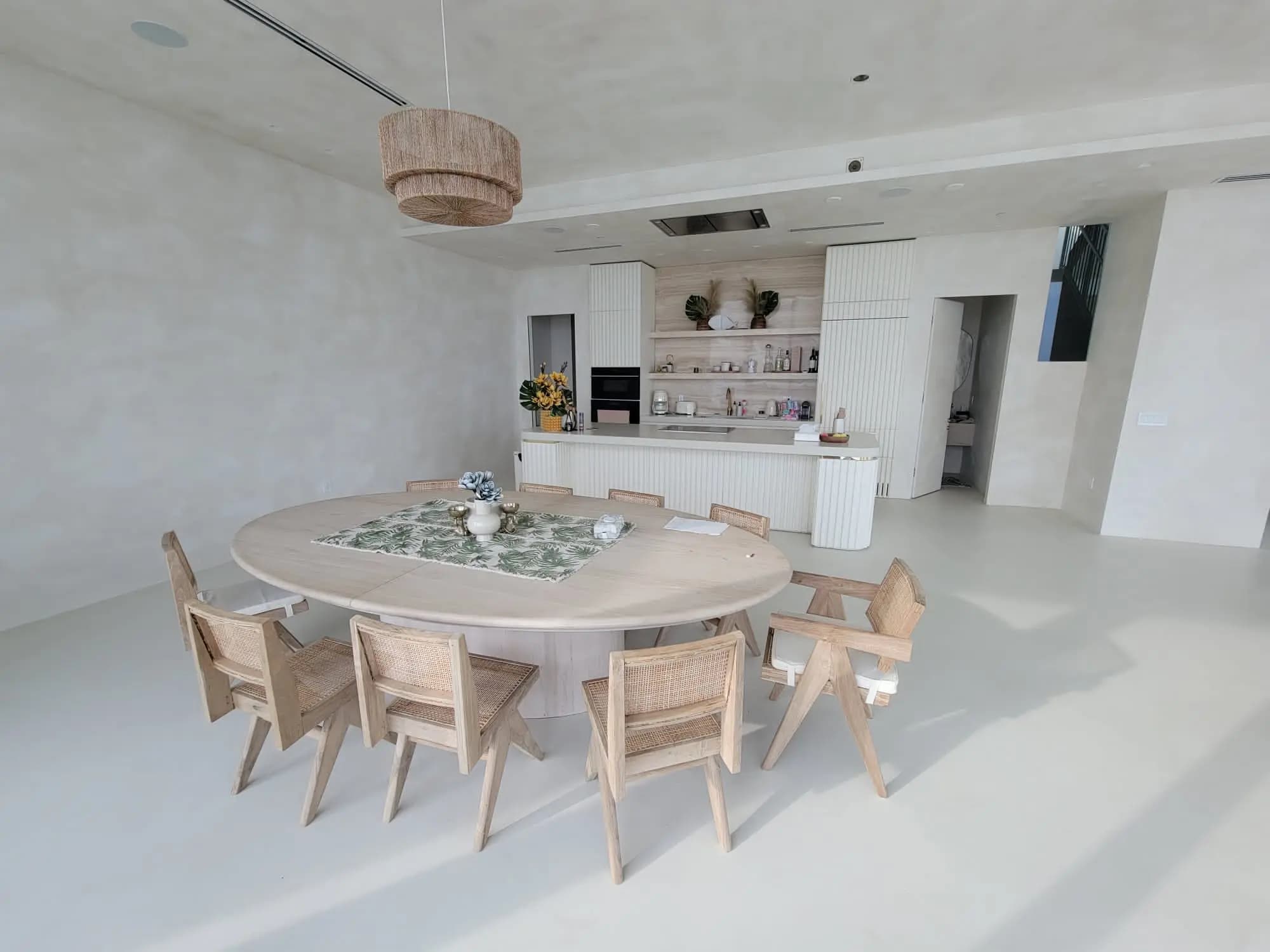
Choosing a colour and finish from a screen is the one shortcut worth avoiding. Microcement is handcrafted and sealed, the tone shifts with the light, and the finish changes how the whole surface behaves. Those are exactly the variables a printed chart cannot show you.
The full palette of finishes and tones, with the ideal use for each, lives on our finishes and colours page. When you are ready to narrow it down, we bring physical samples to your home across Málaga and the Costa del Sol so you can see and feel the real surface, in your own light, before anything is applied. That visit is free and it is the step that turns a guess into a confident decision.
Section 07
Frequently asked questions
What microcement colours are available? Microcement comes in 60+ colours across four families: neutrals and whites (snow white, ivory, sand), greys (pearl, mid, graphite), earth and warm tones (terracotta, ochre, caramel) and darks (anthracite, slate, black). Bespoke colours can also be matched to a reference or brand.
How do I choose the right microcement colour? Start with the room's natural light, then match the tone to the mood you want: pale neutrals enlarge small or north-facing rooms, warm earths add cosiness, dark tones suit large, well-lit spaces. Always test a physical sample in the actual room before deciding, as light changes a colour completely.
What microcement finishes are there? There are three core microcement finishes: rustic (rough, slip-resistant texture), smooth (even and contemporary) and metallic (reflective and exclusive). The smooth finish can then be sealed matt, satin or gloss, which changes how much light the surface reflects without changing the colour itself.
Which microcement colours are trending in 2026? In 2026 the strongest microcement trends are warm earth tones (terracotta, taupe, clay and olive), soft greige neutrals, and deep moody darks such as anthracite for feature walls. Cool, flat greys are giving way to warmer, more natural and tactile mineral surfaces.
What is the best microcement colour for a bathroom? For most bathrooms, soft neutrals and warm greiges work best: they feel calm, clean and spacious, and they hide water marks better than very dark or very pale tones. In a large, well-lit bathroom, a deep anthracite or clay tone can create a striking spa-like feel.
Can I get a bespoke microcement colour? Yes. Beyond the 60+ standard tones, microcement can be colour-matched to a specific reference, a paint code or a brand identity. Send the reference to your applicator and ask for a physical sample, since custom mixes should always be checked in the real light of your space.
Frequently asked questions
Common questions
What microcement colours are available?
Microcement comes in 60+ colours across four families: neutrals and whites (snow white, ivory, sand), greys (pearl, mid, graphite), earth and warm tones (terracotta, ochre, caramel) and darks (anthracite, slate, black). Bespoke colours can also be matched to a reference or brand.
How do I choose the right microcement colour?
Start with the room's natural light, then match the tone to the mood you want: pale neutrals enlarge small or north-facing rooms, warm earths add cosiness, dark tones suit large, well-lit spaces. Always test a physical sample in the actual room before deciding, as light changes a colour completely.
What microcement finishes are there?
There are three core microcement finishes: rustic (rough, slip-resistant texture), smooth (even and contemporary) and metallic (reflective and exclusive). The smooth finish can then be sealed matt, satin or gloss, which changes how much light the surface reflects without changing the colour itself.
Which microcement colours are trending in 2026?
In 2026 the strongest microcement trends are warm earth tones (terracotta, taupe, clay and olive), soft greige neutrals, and deep moody darks such as anthracite for feature walls. Cool, flat greys are giving way to warmer, more natural and tactile mineral surfaces.
What is the best microcement colour for a bathroom?
For most bathrooms, soft neutrals and warm greiges work best: they feel calm, clean and spacious, and they hide water marks better than very dark or very pale tones. In a large, well-lit bathroom, a deep anthracite or clay tone can create a striking spa-like feel.
Can I get a bespoke microcement colour?
Yes. Beyond the 60+ standard tones, microcement can be colour-matched to a specific reference, a paint code or a brand identity. Send the reference to your applicator and ask for a physical sample, since custom mixes should always be checked in the real light of your space.

Written by
Esteban Godoy Méndez
Microcement applicator and founder of GM Microcemento
Esteban Godoy is a professional microcement applicator and the founder of GM Microcemento. Since 2020 he has delivered continuous-coating projects in homes and commercial spaces across Málaga and the Costa del Sol.
Meet GM MicrocementoKeep reading
Related articles
 Application
Microcement in Kitchens and Worktops: Benefits, Limits and Care (Water, Heat, Knives)
Is a microcement worktop heat resistant? Does it stain with wine or oil? An honest applicator's guide to what microcement can and cannot do in a kitchen, water, heat and knives included.
Esteban Godoy MéndezRead article
 Application
Microcement and Underfloor Heating: Compatibility and How It's Done
Microcement and underfloor heating work brilliantly together when the substrate is prepared properly and the heating is commissioned in the right order. Here is exactly how a professional applicator does it, and why it won't crack.
Esteban Godoy MéndezRead article
Online estimator
Your quote in 4 simple steps
Estimate your microcement online in under 5 minutes. We review it by hand within 48 hours and send you a precise quote, with no obligation.
Fast
4 simple steps, done in 5 minutes.
Reviewed in 48h
A specialist checks it by hand — not an automatic number.
Precise
A quote tailored to your square metres and your finish.
Take the next step
Ready to take the step with microcement?
If this guide has cleared up your doubts, let's take the next step: work out the cost or ask us for a no-obligation quote in Málaga and across the Costa del Sol.