Microcement is a continuous decorative coating, between 2 and 3 mm thick, applied directly over existing surfaces —floors, walls, worktops or furniture— with no building work and without removing the old material. It forms a seamless, hard-wearing layer with a handcrafted finish that is in high demand in interior design.
Guides
What is microcement? A complete guide to understanding it
Microcement is a continuous decorative coating, 2 to 3 mm thick, applied with no building work over floors, walls and other surfaces. We explain what it is, what it is made of, where it goes and what advantages it brings.
- Esteban Godoy Méndez
- 7 min read
- Category
- Guides
- Reading
- 7 min
- Coverage
- Costa del Sol
Section 01
What is microcement made of?
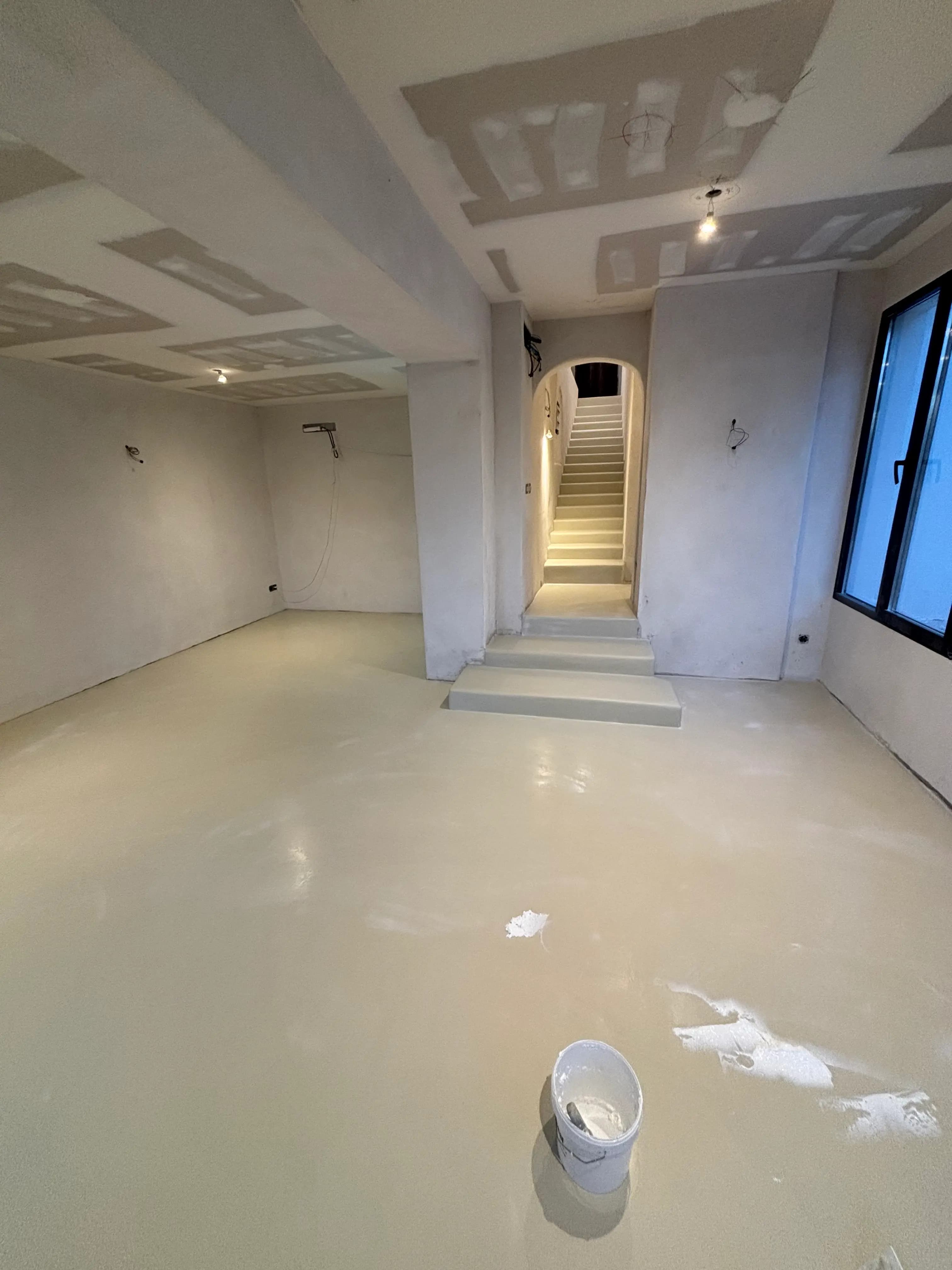
It is a composite material based on cement, resins (acrylic or polyurethane), very fine aggregates, pigments and additives. That mix is what gives it a dual nature: the hardness of cement and the flexibility and grip of the resins. Thanks to those resins, the coating bonds to almost any base —tiles, ceramic, plaster, plasterboard, concrete or wood— without peeling or cracking with the small movements of the substrate underneath.
It should not be confused with traditional polished concrete. Polished concrete is a structural mass several centimetres thick; microcement is a decorative coating just a few millimetres deep, applied in layers and then sealed. That is why it weighs very little and barely raises the floor level.
Section 02
Which surfaces can microcement go on?
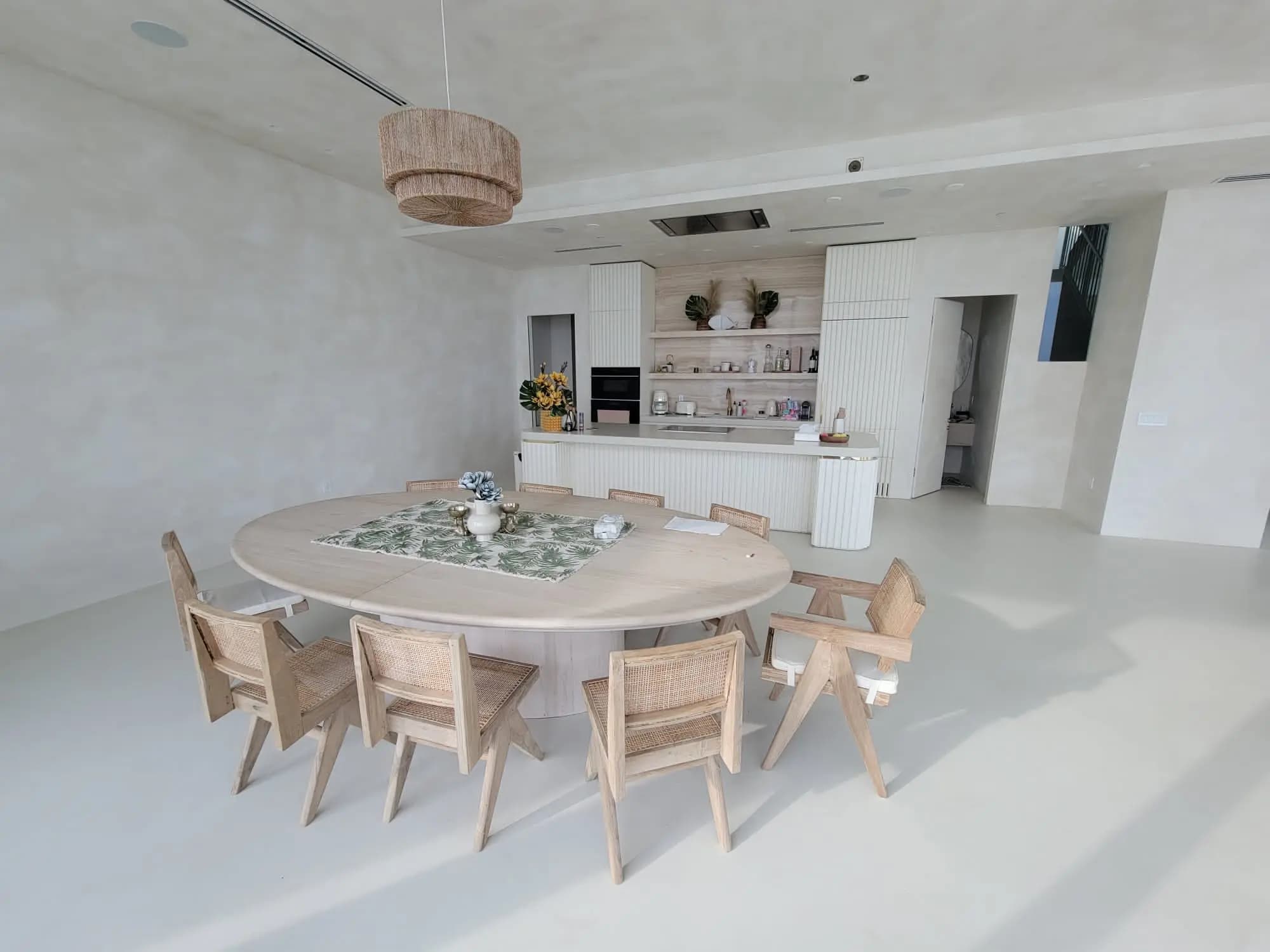
One of the big reasons for its success is its versatility: the same material works on almost any surface in the home, giving the whole space visual continuity.
- Interior and exterior floors, even over old tiles without lifting them.
- Walls, kitchen splashbacks and back panels.
- Bathrooms and showers, where it is applied as a seamless waterproof system.
- Worktops, basins, furniture and bespoke pieces.
- Stairs, terraces, façades and swimming-pool shells.
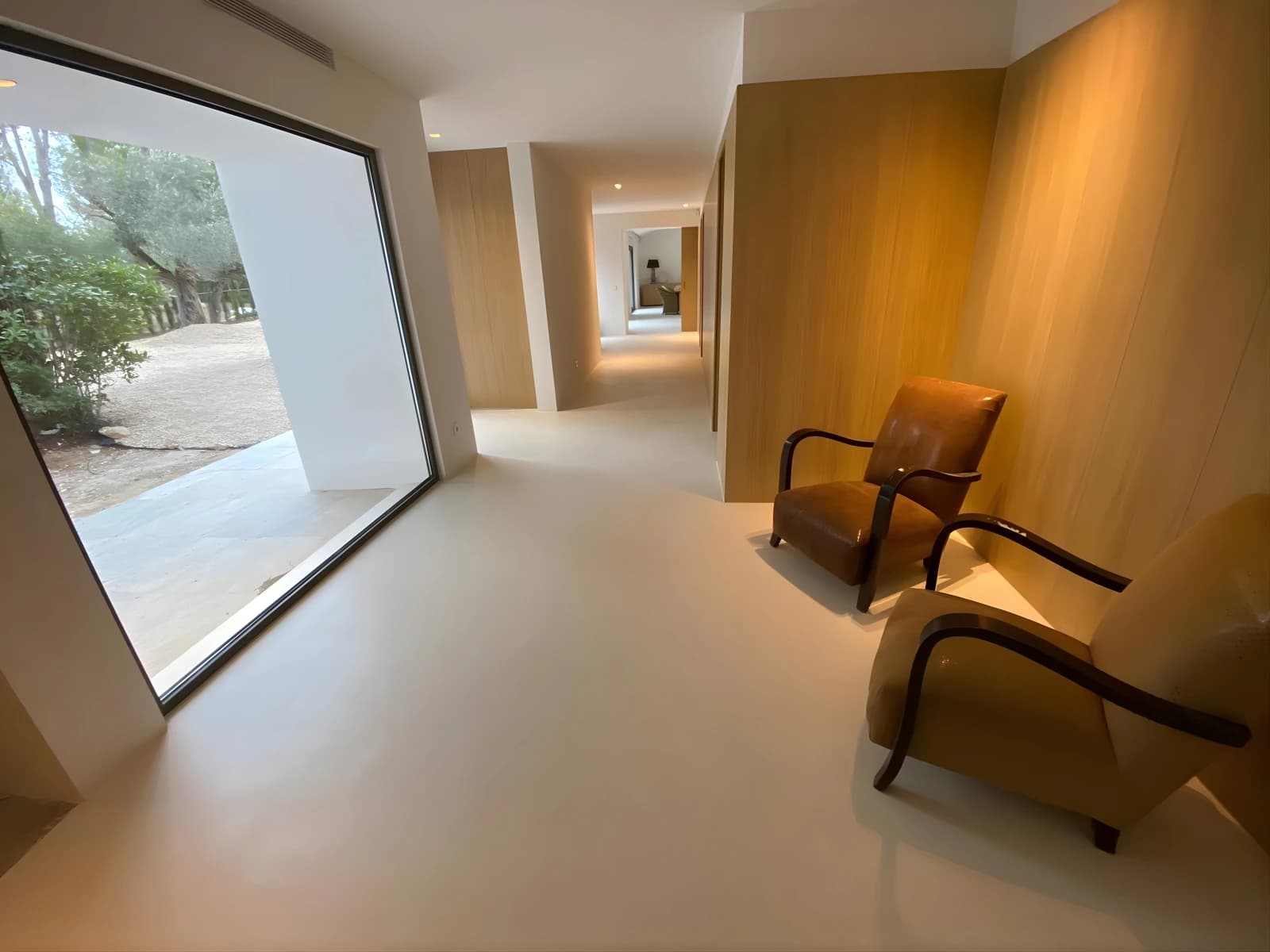
Microcement on site
Section 03
How thick is it and how much does it weigh?
It is applied at a total thickness of 2 to 3 mm, spread over several thin layers. That has two very practical consequences. The first is that it barely raises the floor level, so doors and skirting rarely need to be trimmed. The second is that it adds very little load to the structure: around 4-5 kg per square metre, against more than 20 kg for a conventional tiled floor. That makes it ideal for refurbishing top-floor flats, terraces and slabs without overloading them.
Microcement on site
Section 04
What are the advantages of microcement?
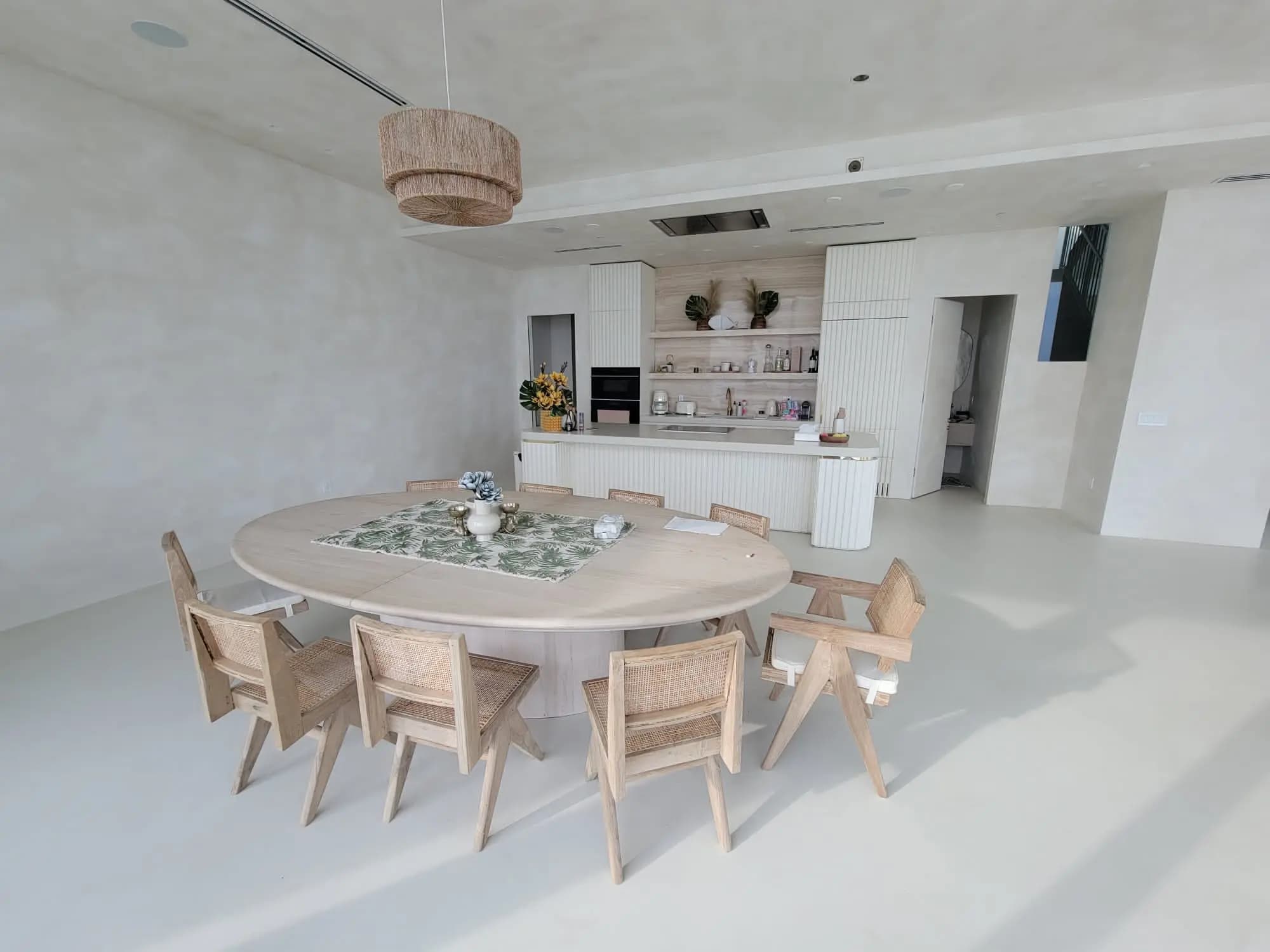
- It is applied with no building work: nothing is chiselled out or removed, so there is no rubble or dust.
- Seamless continuity: a uniform surface that is easy to clean and very hygienic.
- Strong resistance to wear and foot traffic once sealed.
- A wide catalogue of colours and finishes (rustic, smooth, metallic).
- Compatible with underfloor heating and with almost any substrate.
Microcement on site

Section 05
Microcement versus other materials
| Feature | Microcement | Ceramic tile | Polished concrete |
|---|---|---|---|
| Thickness | 2-3 mm | 8-12 mm + adhesive | 4-10 cm |
| Joints | Seamless | Grouted joints | Possible cracks |
| Building work to install? | No, over what exists | Yes, usually chiselled | Yes, structural |
| Weight per m² | Very low (~4-5 kg) | High (~20 kg) | Very high |
Thickness
- Microcement
- 2-3 mm
- Ceramic tile
- 8-12 mm + adhesive
- Polished concrete
- 4-10 cm
Joints
- Microcement
- Seamless
- Ceramic tile
- Grouted joints
- Polished concrete
- Possible cracks
Building work to install?
- Microcement
- No, over what exists
- Ceramic tile
- Yes, usually chiselled
- Polished concrete
- Yes, structural
Weight per m²
- Microcement
- Very low (~4-5 kg)
- Ceramic tile
- High (~20 kg)
- Polished concrete
- Very high
Section 06
Frequently asked questions about what microcement is
Frequently asked questions
Common questions
Is microcement the same as polished concrete?
No. Polished concrete is a structural mass several centimetres thick; microcement is a decorative coating of 2-3 mm applied in layers over the existing surface and then sealed. Microcement weighs far less and needs no building work.
Can microcement be applied over tiles?
Yes. One of microcement's big advantages is that it bonds over tiles or ceramic without removing them, provided the substrate is sound and properly prepared with the right primer. This is the basis of renovations with no building work.
Does microcement crack?
Applied correctly, no. The resins give it flexibility to absorb the small movements of the substrate. Cracks tend to appear when the reinforcing mesh is skipped, layers are applied too thick or curing times are not respected.
How long does microcement last?
With correct sealing and basic maintenance, a microcement floor can last many years while keeping its look. The key is to renew the protective sealer from time to time, depending on how heavily the area is used.

Written by
Esteban Godoy Méndez
Microcement applicator and founder of GM Microcemento
Esteban Godoy is a professional microcement applicator and the founder of GM Microcemento. Since 2020 he has delivered continuous-coating projects in homes and commercial spaces across Málaga and the Costa del Sol.
Meet GM MicrocementoKeep reading
Related articles
 Costs
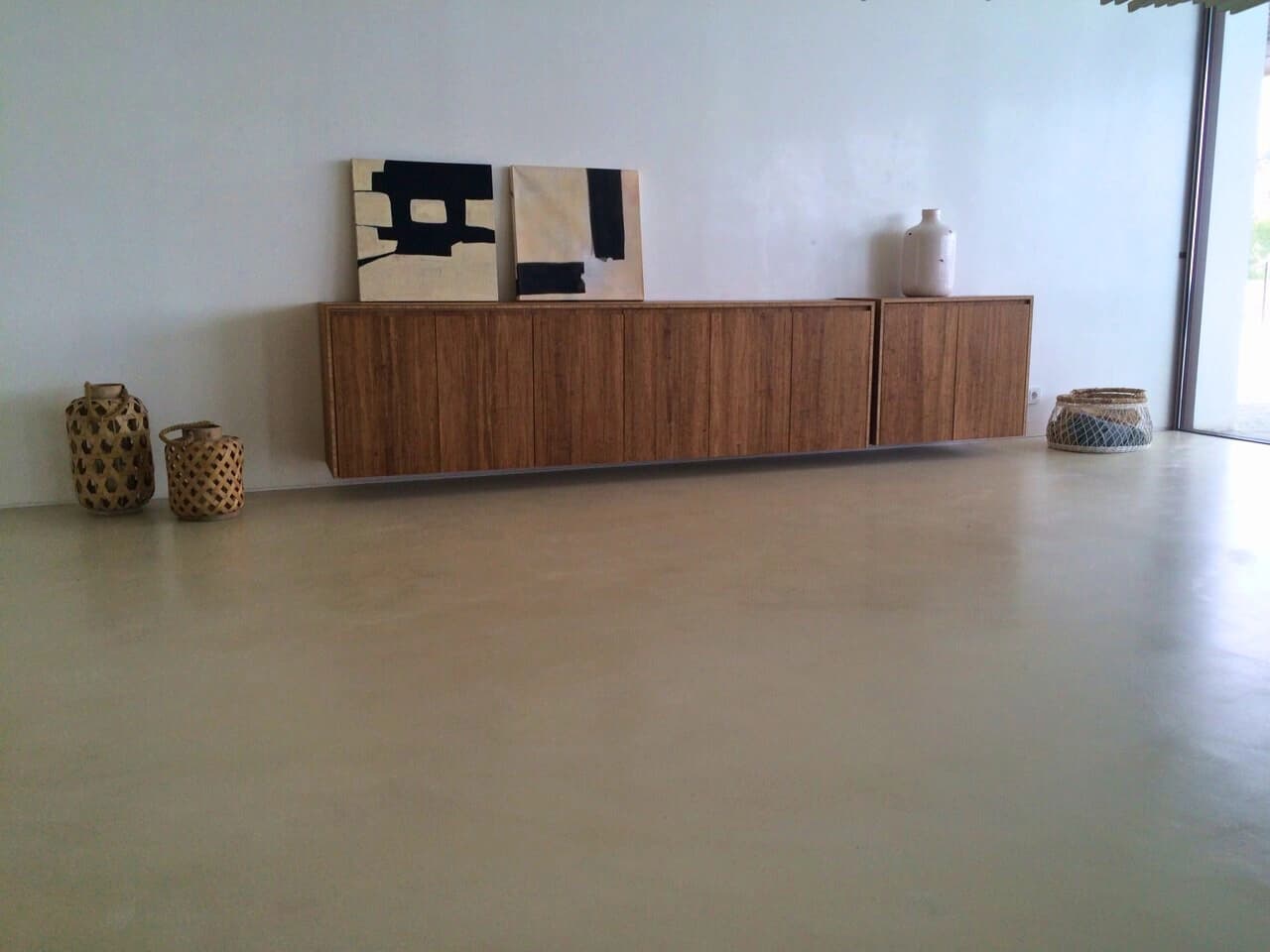
CostsMicrocement: cost, pros and cons (an honest guide)
How much does microcement cost per m², and is it worth it? We go through the cost by surface, its real advantages and also its drawbacks and limitations, so you can decide with a clear head.
Esteban Godoy MéndezRead article
 Application
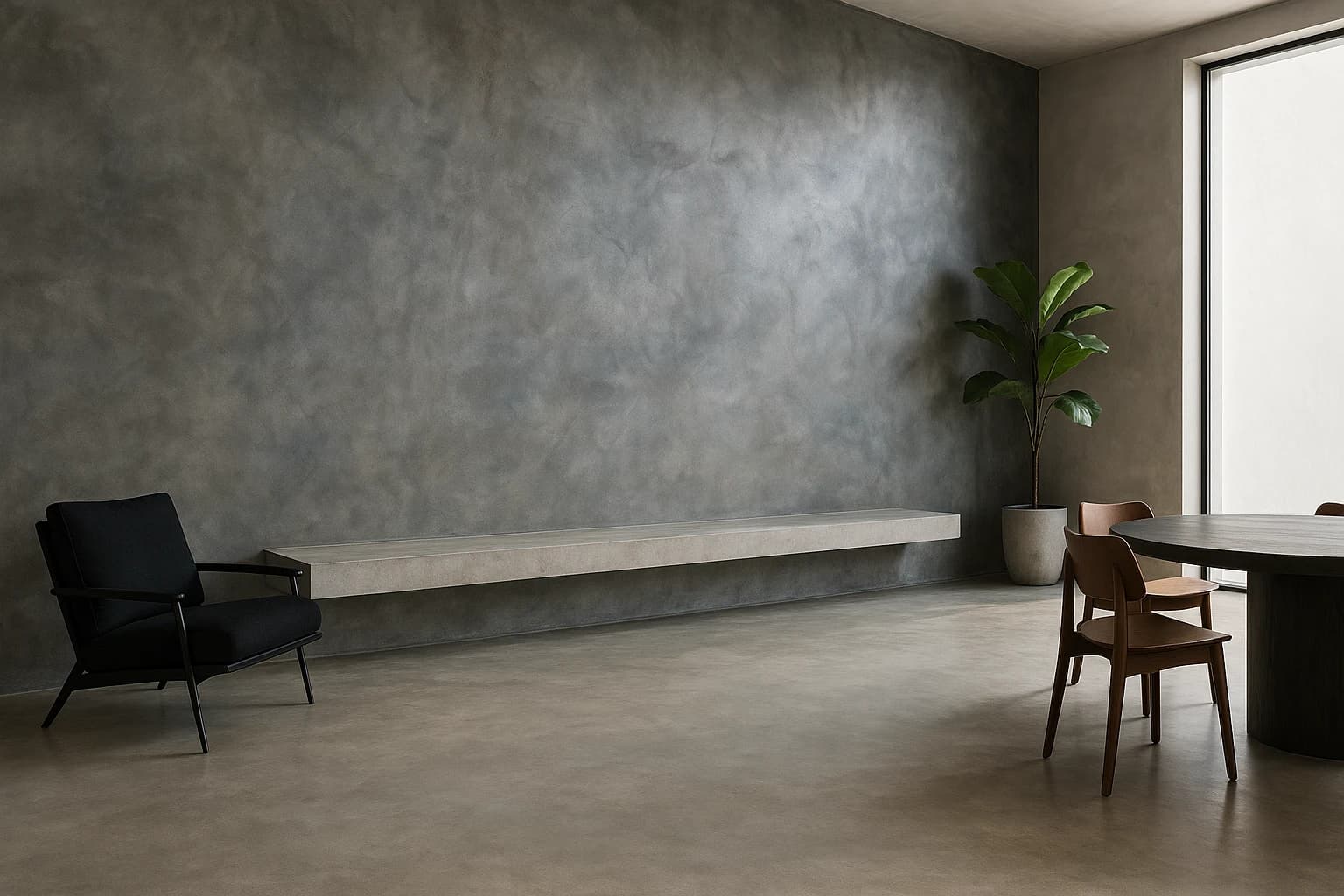
Microcement in bathrooms: a practical guide (waterproofing and application)
Is microcement waterproof in a bathroom? Can it go over the tiles? We answer the key questions and walk you, step by step, through how microcement is applied in bathrooms and showers.
Esteban Godoy MéndezRead article
Online estimator
Your quote in 4 simple steps
Estimate your microcement online in under 5 minutes. We review it by hand within 48 hours and send you a precise quote, with no obligation.
Fast
4 simple steps, done in 5 minutes.
Reviewed in 48h
A specialist checks it by hand — not an automatic number.
Precise
A quote tailored to your square metres and your finish.
Take the next step
Ready to take the step with microcement?
If this guide has cleared up your doubts, let's take the next step: work out the cost or ask us for a no-obligation quote in Málaga and across the Costa del Sol.