Choosing the surface for a floor, a bathroom or a feature wall comes down to three serious contenders: microcement, porcelain tiles and epoxy resin. The short version is this — microcement gives you a seamless, natural matte finish over almost any existing surface; porcelain is the hardest and cheapest material but keeps its grout joints; and epoxy is a glossy, ultra-chemical-resistant resin made for garages and industrial use rather than living spaces.
Guides
Microcement vs Porcelain Tiles vs Epoxy Resin: Which Surface Should You Choose?
Microcement, porcelain or epoxy resin? We compare the three head to head — look, joints, thickness, durability, maintenance and cost — so you can pick the right surface for your home or project.
- Esteban Godoy Méndez
- 8 min read
- Category
- Guides
- Reading
- 8 min
- Coverage
- Costa del Sol
Section 01
Microcement vs epoxy vs porcelain: which surface is right for you?
I am Esteban Godoy, a microcement applicator on the Costa del Sol, and I will be the first to tell you that no single surface wins on every count. This guide compares the three honestly — look, joints, thickness, durability, maintenance and cost — so you can match the right material to your room and your budget. There is a full comparison table further down.
Section 02
What is the difference between microcement and epoxy?
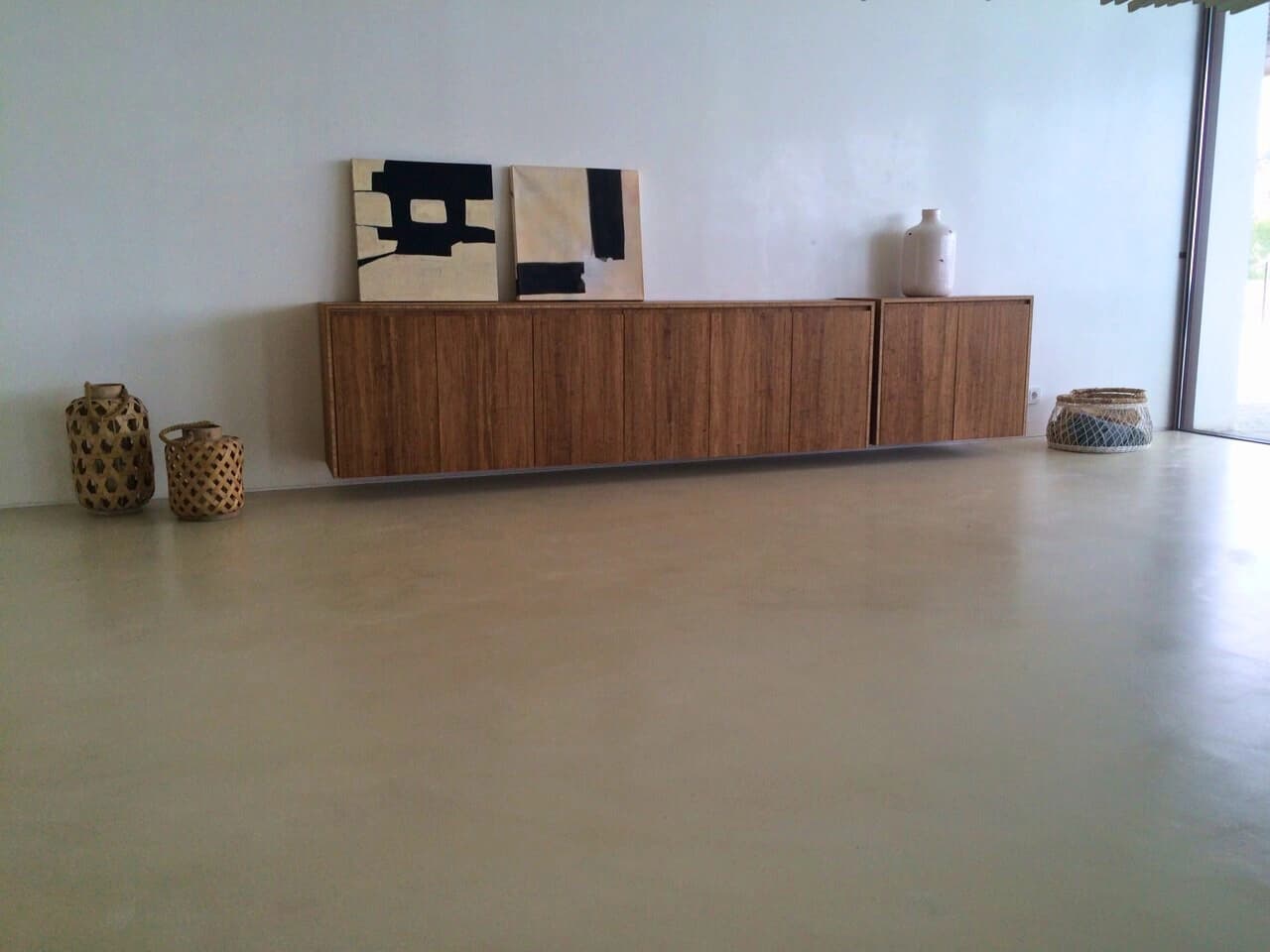
The core difference is the material itself and the look it produces. Microcement is a cement-based coating — cement, resins, fine aggregates and pigment — that cures to a natural, mineral, matte (or lightly satin) finish. Epoxy is a 100% synthetic two-part resin that cures to a hard, glossy, plastic-like film.
That difference drives everything else:
- Appearance. Microcement reads as warm and handcrafted, with subtle trowel movement. Epoxy reads as uniform, shiny and clinical — closer to a poured plastic sheet.
- Where each belongs. Microcement is designed for homes: floors, bathrooms, kitchens, feature walls. Epoxy excels in garages, workshops, warehouses and laboratories where machinery and aggressive chemicals are routine.
- Chemical resistance. Epoxy is the king here. It shrugs off oils, solvents and acids that would mark an unprotected residential surface.
- Repairability. A worn patch of microcement can be re-sanded, re-coloured and re-sealed locally. Epoxy is harder to blend invisibly because a fresh pour rarely matches the aged film around it.
In short: if you want an industrial floor that resists forklift traffic and battery acid, epoxy. If you want a continuous design surface for a home, microcement.
Section 03
Is microcement better than porcelain tiles?
Neither is simply "better" — they solve different problems. Porcelain tiles are extremely hard, scratch resistant and among the cheapest materials per m². But they arrive in fixed pieces, which means grout joints that collect dirt, interrupt the surface and often need building work to install.
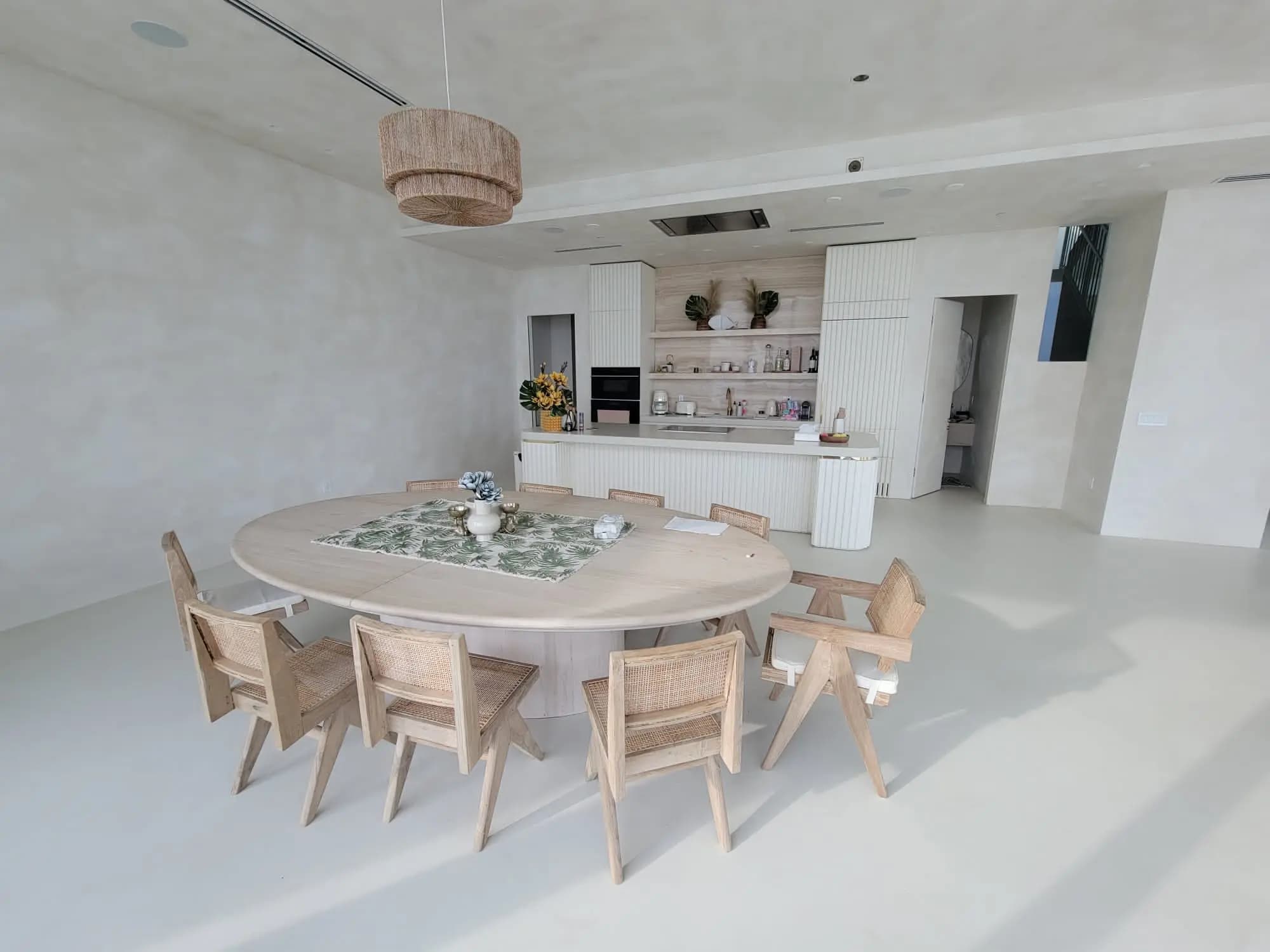
Microcement is a continuous coating with no joints at all. It can go straight over your existing tiles — cleaned, primed and with the grout lines filled — so you renovate with no chiselling, no rubble and no skip hire. That single feature is why so many bathroom and floor renovations now choose it.
Where porcelain still wins:
- Raw surface hardness and resistance to dropped, heavy objects.
- Lowest material cost per m².
- Zero curing wait once grouted and dry.
Where microcement wins:
- A seamless, modern, joint-free look that feels bigger and is easier to wipe clean.
- Installation over the old surface, with no demolition.
- Only 2 to 3 mm of added thickness, so doors and skirting rarely need trimming.
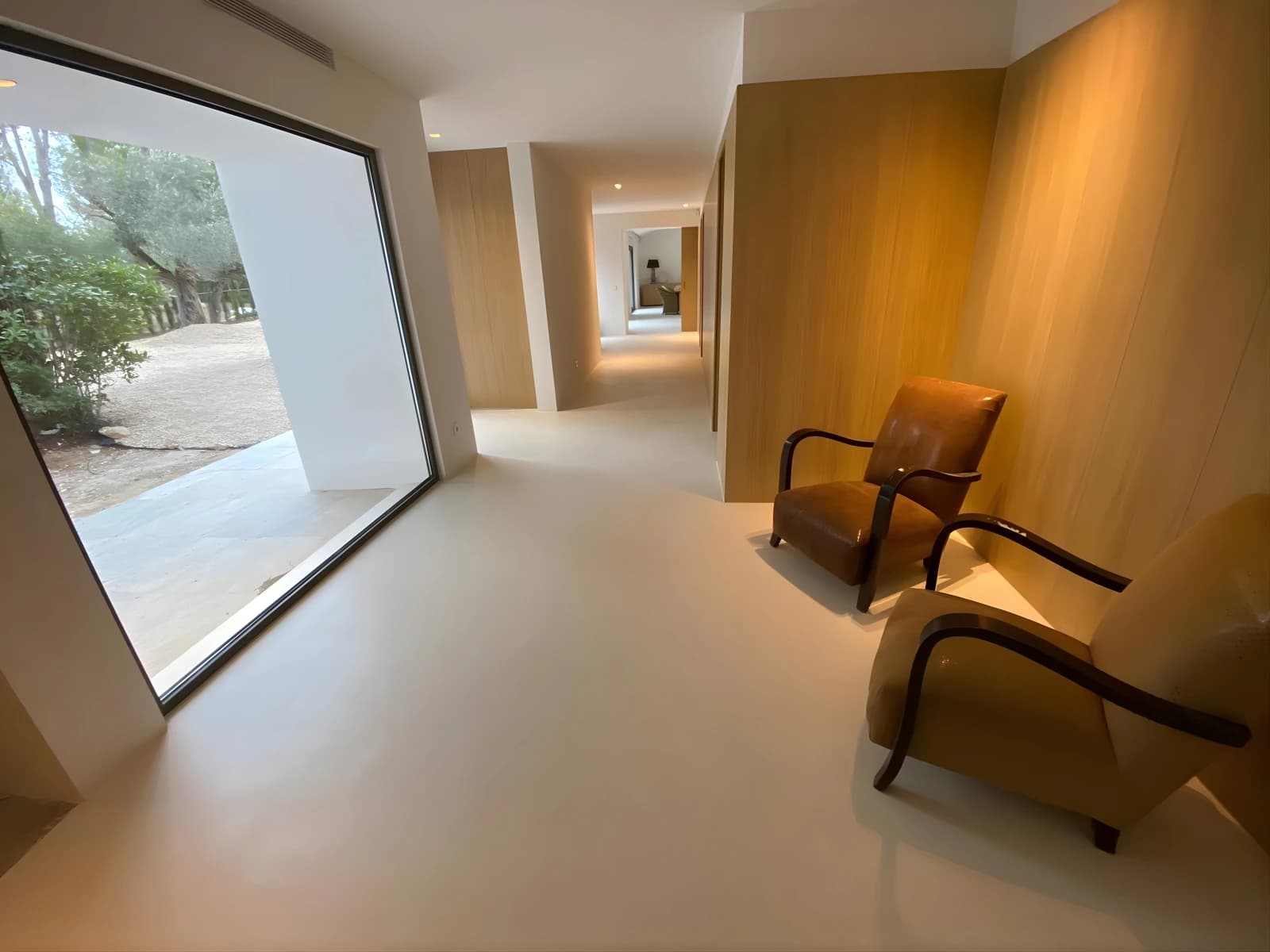
If you are leaning towards a continuous floor, our microcement floors page shows what the finished result looks like in real homes.
Microcement on site
Section 04
Are microcement and polished concrete the same thing?
This one trips people up constantly, so let me clear it up. No — microcement and polished concrete are not the same.
Polished concrete is a structural mass: a concrete slab poured several centimetres thick and then mechanically ground and polished on site. It is heavy, it needs a proper sub-base, and it is essentially the floor itself.
Microcement is a decorative coating just 2 to 3 mm thick. It is troweled in thin layers over an existing surface — tiles, screed, plasterboard, old terrazzo — and then sealed. It weighs around 4 to 5 kg per m², against the considerable weight of a concrete slab.
The visual result can look similar (both can give that grey, mineral, seamless feel), but practically they are worlds apart. Microcement lets you achieve the concrete look on an upper-floor flat or over existing tiles, where pouring real polished concrete would be impossible.
Section 05
Microcement vs porcelain vs epoxy: the comparison table
Here is the head-to-head at a glance. Use it to spot the trade-offs that matter most for your project.
| Feature | Microcement | Porcelain tiles | Epoxy resin |
|---|---|---|---|
| Look / finish | Natural, matte, handcrafted | Wide variety, factory-uniform | Glossy, synthetic, clinical |
| Joints | Seamless, no joints | Grout lines throughout | Seamless, no joints |
| Thickness added | 2–3 mm | 8–12 mm + adhesive | 1–3 mm |
| Over the existing surface? | Yes, over tiles with no demolition | Usually needs building work | Yes, over a sound, prepared base |
| Impact / scratch resistance | Good once sealed | Excellent (hardest of the three) | Very good, but can chip and yellow |
| Chemical resistance | Good (sealer-dependent) | Excellent | Outstanding (its strong point) |
| Best for | Homes, bathrooms, feature walls, floors | High-traffic and wet-impact areas | Garages, workshops, industrial floors |
| Maintenance | Renew sealer periodically | Very low; re-grout occasionally | Renew topcoat; UV can dull it |
| Look at home or industrial? | Residential, premium | Both | Industrial-leaning |
Look / finish
- Microcement
- Natural, matte, handcrafted
- Porcelain tiles
- Wide variety, factory-uniform
- Epoxy resin
- Glossy, synthetic, clinical
Joints
- Microcement
- Seamless, no joints
- Porcelain tiles
- Grout lines throughout
- Epoxy resin
- Seamless, no joints
Thickness added
- Microcement
- 2–3 mm
- Porcelain tiles
- 8–12 mm + adhesive
- Epoxy resin
- 1–3 mm
Over the existing surface?
- Microcement
- Yes, over tiles with no demolition
- Porcelain tiles
- Usually needs building work
- Epoxy resin
- Yes, over a sound, prepared base
Impact / scratch resistance
- Microcement
- Good once sealed
- Porcelain tiles
- Excellent (hardest of the three)
- Epoxy resin
- Very good, but can chip and yellow
Chemical resistance
- Microcement
- Good (sealer-dependent)
- Porcelain tiles
- Excellent
- Epoxy resin
- Outstanding (its strong point)
Best for
- Microcement
- Homes, bathrooms, feature walls, floors
- Porcelain tiles
- High-traffic and wet-impact areas
- Epoxy resin
- Garages, workshops, industrial floors
Maintenance
- Microcement
- Renew sealer periodically
- Porcelain tiles
- Very low; re-grout occasionally
- Epoxy resin
- Renew topcoat; UV can dull it
Look at home or industrial?
- Microcement
- Residential, premium
- Porcelain tiles
- Both
- Epoxy resin
- Industrial-leaning
How to read the table
If your priority is a warm, seamless, design-led home, microcement is the natural fit. If it is maximum hardness at the lowest material cost and you do not mind grout lines, porcelain. If it is a garage, plant room or workshop facing oil, solvents and machinery, epoxy.
Microcement on site
Section 06
Which is easier to maintain and repair?
Day to day, all three are easy to keep clean — a pH-neutral cleaner and water is enough for any of them. The real differences show up over the long term.
- Microcement needs its protective sealer renewed periodically, more often in busy areas. The upside is that a tired or damaged patch can be re-sanded, re-coloured and re-sealed locally, so the floor is refreshed rather than replaced.
- Porcelain tiles are the lowest-maintenance surface of the three — the tile body barely changes. The weak point is the grout, which discolours and occasionally needs raking out and replacing. A cracked individual tile, though, is a fiddly repair.
- Epoxy is tough but harder to repair invisibly. The cured film ages, and over years of sunlight it can yellow or dull, which is one reason it is rarely chosen for bright living spaces.
Whichever you pick, the single biggest factor in longevity is the quality of the installation and of the sealer. A neglected sealer ages a surface faster than any amount of foot traffic.
Section 07
Which is cheaper per m²?
Honestly, the headline price can mislead you. Porcelain tiles are usually the cheapest *material* per m² — but the moment you add fitting, demolition of the old floor, adhesive, grout and rubble disposal, the total climbs.
Microcement and epoxy cost more per m² as installed systems, yet they frequently go straight over the existing surface, so you save the demolition, the rubble removal and the days of disruption. For a renovation where you keep the home liveable, that often closes the gap.
For microcement specifically, the final figure depends on the surface, its condition and the finish you choose. You can see our current rates and request a no-obligation quote on the microcement pricing page, or get a fast ballpark with the online calculator before you commit to anything.
Microcement on site

Section 08
Which finish suits a home — and which suits a garage?
Match the surface to the room, not to a trend:
- Living rooms, hallways and open-plan floors → microcement, for the seamless, warm, continuous look. Browse the finishes and colours to see how tone changes the feel of a space.
- Bathrooms and wet rooms → microcement, applied as a complete waterproof system; or porcelain if you want the hardest possible surface and do not mind grout.
- Kitchens and splashbacks → microcement for continuity, porcelain for maximum heat and impact tolerance behind the hob.
- High-impact commercial areas → porcelain, for sheer hardness.
- Garages, workshops and plant rooms → epoxy, every time, for chemical and abrasion resistance.
There is no universal winner. The right choice is the one that fits the way you actually live in — or work in — the space.
Section 09
A final, honest word
After years applying microcement across Málaga, Marbella and the wider Costa del Sol, my advice is simple: choose by use, not by hype. Microcement is my craft and I believe in it for homes, but I would never sell it for a forklift-traffic warehouse — that is epoxy's job — and I will happily tell a client that porcelain is the smarter call when raw hardness matters more than a seamless finish.
If you want a continuous, design-led surface for a home or a villa, and you trust the application to a professional, microcement is hard to beat. Whatever you are leaning towards, weigh up the table above against your room, your budget and how you live, and the right surface usually becomes obvious.
Frequently asked questions
Common questions
What is the difference between microcement and epoxy?
Microcement is a cement-based decorative coating with a natural matte finish, while epoxy is a synthetic resin with a glossy, plastic-like look. Microcement suits homes and design spaces; epoxy is built for garages, workshops and industrial floors that face heavy chemicals and machinery.
Is microcement better than tiles?
It depends on what you want. Microcement gives you a seamless, joint-free surface that can go straight over existing tiles with no demolition, ideal for a continuous modern look. Porcelain tiles are harder and cheaper per m², but they keep their grout lines and usually need building work to fit.
Are microcement and polished concrete the same thing?
No. Polished concrete is a structural slab several centimetres thick that is poured and ground on site. Microcement is a decorative coating just 2 to 3 mm thick, applied in thin layers over almost any existing surface and then sealed. They look similar but work in completely different ways.
Which lasts longer: microcement, porcelain or epoxy?
All three last for many years when installed well. Porcelain tiles are the most scratch and impact resistant. Microcement and epoxy depend heavily on the applicator and on renewing the protective sealer over time. A neglected sealer is the main reason any of these surfaces wears early.
Which is cheaper per m²: microcement, porcelain or epoxy?
Porcelain tiles are usually the cheapest material per m², but fitting, demolition and rubble disposal push the total up. Microcement and epoxy cost more per m², yet they often go straight over the old surface with no building work. You can check our current microcement rates on the pricing page.

Written by
Esteban Godoy Méndez
Microcement applicator and founder of GM Microcemento
Esteban Godoy is a professional microcement applicator and the founder of GM Microcemento. Since 2020 he has delivered continuous-coating projects in homes and commercial spaces across Málaga and the Costa del Sol.
Meet GM MicrocementoKeep reading
Related articles
 Guides
How to Clean and Maintain Microcement: Daily Care, Products and Resealing
A simple, honest guide to cleaning and maintaining microcement: the daily routine, which pH-neutral products to use, what to avoid, and how often to reseal so floors and walls keep their finish for years.
Esteban Godoy MéndezRead article
 Guides
Microcement Colours and Finishes: How to Choose Yours (and 2026 Trends)
From neutral greys to warm terracotta, and from smooth to mineral finishes, choosing microcement is really two decisions: texture and tone. Here is how a working applicator helps clients pick the right one, plus the colours trending in 2026.
Esteban Godoy MéndezRead article
Online estimator
Your quote in 4 simple steps
Estimate your microcement online in under 5 minutes. We review it by hand within 48 hours and send you a precise quote, with no obligation.
Fast
4 simple steps, done in 5 minutes.
Reviewed in 48h
A specialist checks it by hand — not an automatic number.
Precise
A quote tailored to your square metres and your finish.
Take the next step
Ready to take the step with microcement?
If this guide has cleared up your doubts, let's take the next step: work out the cost or ask us for a no-obligation quote in Málaga and across the Costa del Sol.